

Ukrainian AK Accessories That Earn Their Place
A stamped receiver AK does not need to become an AR clone to run better. The right ukrainian ak accessories preserve the platform's hard-use character while improving the places that matter most: interface, mounting real estate, handling, and fit around your specific rifle.
That distinction matters because AK upgrades are rarely universal. An AKM, AK-74, Arsenal-pattern rifle, underfolder, side-folder, RPK, and compact AKSU-style setup can share a family resemblance while using very different trunnions, handguard dimensions, side rails, gas systems, and stock attachment methods. Premium parts are only premium when they fit the host rifle correctly and solve a real problem.
What Ukrainian AK Accessories Change First
The best upgrade path starts with the rifle in front of you, not a generic parts list. A shooter running iron sights at short range may get more practical value from a stable handguard and improved grip than from a high-mounted optic system. A rifle intended for a compact truck, range, or training setup may benefit most from a folding stock solution. A collector-minded build may call for a more restrained furniture package that keeps the original silhouette intact.
Ukrainian-made accessories appeal to serious AK owners because Eastern European manufacturers build around the realities of the platform. Their furniture and controls are typically designed for rifles that see hard handling, heat, field use, and the dimensional quirks common to AK-pattern guns. That does not mean every part fits every variant. It means the design priorities usually start where AK owners need them to start: durability, retention, low-profile geometry, and platform-specific fitment.
A good build has a clear purpose. It should not be a pile of parts selected because they look aggressive in product photos.
Handguards and M-LOK Furniture
A handguard is often the most meaningful modernization point on an AK. It changes how the rifle balances, where the support hand sits, how heat is managed, and whether a light, hand stop, sling mount, or other compatible accessory can be positioned where it is actually useful.
M-LOK-compatible aluminum handguards bring modularity without covering every surface in unused rail. That keeps the package cleaner and can reduce the sharp, overbuilt feel of older quad-rail setups. The trade-off is heat. Metal handguards can transfer heat quickly during sustained firing, so a shooter should consider rail covers, a hand stop, gloves, or the intended firing schedule before choosing a slim metal setup.
Fitment remains the deciding factor. Verify whether the handguard is built for an AKM, AK-74, RPK, AKSU, or a specific commercial-pattern rifle. Check the gas tube relationship, lower retainer arrangement, barrel diameter considerations, and whether a particular configuration requires a compatible upper handguard or additional hardware. A clean-looking handguard that requires forcing, filing, or improvisation is not a clean solution.
Cerakoted or anodized finishes also serve a practical role beyond appearance. They can add surface protection and let a build carry a consistent color scheme, whether that means black, gray, or a more distinctive hard-use finish. Finish should be the last choice, not the first. Start with platform, mounting needs, and hand position.
Stocks, Adapters, and Rear-End Fitment
The rear of the rifle is where compatibility gets serious fast. Fixed-stock trunnions, 4.5mm and 5.5mm side-folding trunnions, underfolder receivers, and commercial receiver patterns do not accept the same stock systems. Before choosing a folding skeleton stock or adapter, identify the exact rear trunnion and mounting interface on the rifle.
Skeleton stocks are popular for good reason. They cut visual bulk, can provide a more modern cheek and shoulder interface, and pair naturally with compact AK builds. But minimal material can also mean a narrower cheek weld and less comfort during longer range sessions. A traditional fixed stock may still be the better choice for a rifle that spends most of its time on a bench, in positional shooting, or with magnified optics.
Stock adapters expand options, especially for shooters who want to use a different rear interface without permanently changing the rifle. The right adapter can make an older-pattern receiver work with modern stock choices. The wrong adapter can introduce wobble, poor length of pull, awkward folding geometry, or clearance issues around the selector and optic mount. Treat the rear trunnion as a critical interface, not a cosmetic attachment point.
Choosing Ukrainian AK Accessories by Role
A parts catalog makes more sense when viewed through roles rather than categories. Every accessory should improve one of four things: rifle control, sighting capability, mounting capability, or transport and storage.
For rifle control, grips, charging handles, and hand stops are small upgrades with outsized impact. A grip should support your preferred wrist angle without making the selector harder to reach. An enlarged charging handle can offer a more positive grab, particularly with gloves, but it should not create unnecessary snag points or interfere with normal operation. These are handling improvements, not excuses to overload the rifle.
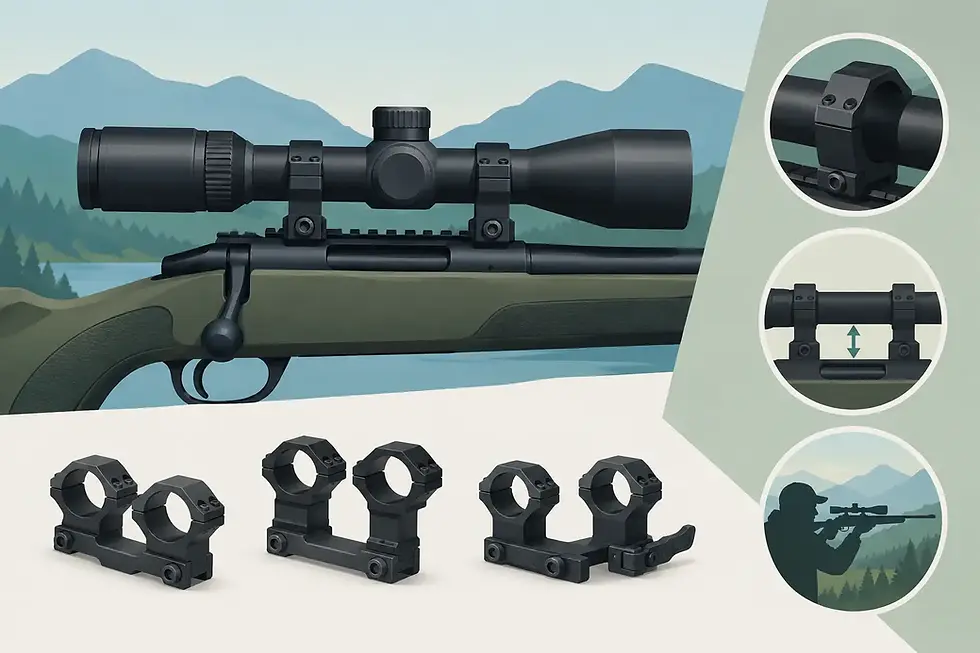
For sighting capability, dust covers, side-rail mounts, and optic mounting systems need a stricter standard. AK optics live or die by retention, return to zero, sight height, and clearance. A mount that sits too high can compromise cheek weld. A dust-cover system that does not lock up consistently may not be the right answer for a rifle that needs dependable zero retention. Consider the optic's size and eye relief alongside the mount. A compact red dot and a magnified optic place different demands on the rifle.
For mounting capability, a handguard or rail system should support only the accessories you will use. A white light setup requires a practical mounting location and switch routing. A sling solution requires attachment points that do not bind through stock movement or interfere with your support hand. Keep the rifle balanced. Weight placed far forward is felt more than weight near the receiver.
For transport and storage, folding stocks and low-profile optic arrangements can make a full-size rifle easier to stage or pack. That benefit comes with compromises. Folding mechanisms add parts, and compact configurations may sacrifice some comfort, balance, or cheek support. There is no universal best setup, only the setup that matches the rifle's job.
Fitment Checks Before You Buy
The fastest way to avoid a bad AK accessory purchase is to stop relying on the rifle's marketing name alone. “AK-47” is not enough information for fitment. Identify the manufacturer, receiver type, caliber, stock configuration, handguard retainer style, and any existing modifications. A commercial import may look close to a military-pattern rifle while differing at the exact point where an accessory mounts.
Before selecting a part, confirm these details:
The rifle's specific pattern, such as AKM, AK-74, Arsenal, RPK, AKS, or AKSU-style configuration.
The front-end configuration, including handguard retainer, gas tube, and barrel-related clearances.
The rear trunnion type, especially when shopping for stocks, folders, or adapters.
The optic interface already present on the rifle, such as a side rail, hinged dust cover, or no factory mounting point.
Any state or local restrictions that may affect the final rifle configuration.
This is where a focused AK catalog earns its keep. Ukrainian AK Guys specializes in parts that make sense within the AK ecosystem, from premium handguards and furniture to muzzle devices, dust covers, grips, rails, mounts, and stock adapters. A curated selection is more useful than a giant parts warehouse when every purchase depends on a few millimeters of fitment and a clear understanding of the host rifle.
Do Not Build Past the Rifle's Purpose
Modern AK furniture can make a rifle more adaptable, but it cannot erase the platform's basic design. A heavy rail, oversized optic, large muzzle device, full light package, backup accessories, and folding stock may look complete, yet leave the rifle front-heavy and less pleasant to run. Conversely, a stripped rifle may be elegant but fail to support the light, sling, or sighting system you actually need.
Start with the baseline rifle and identify the first limitation you notice in real use. If the issue is heat and support-hand placement, look at handguards. If it is stock length or folding capability, inspect rear-end options. If it is sighting speed, focus on a stable mount and appropriate optic height. Make one change, assess it, then move to the next.
The right Ukrainian AK accessory is not the loudest component on the rifle. It is the part that fits your exact pattern, holds up to real use, and makes the next range session feel like the rifle is finally working with you instead of against you.

Comments